
Standardizing
Victor M. Tuset & Antoni Lombarte
2025-11-27
Source:vignettes/Otolith_Morphology.Rmd
Otolith_Morphology.RmdImages
Otolith images should be placed with the sulcus acusticus facing upward, the rostrum to the right, and the dorsal margin at the top (Tuset et al., 2008; Lombarte and Tuset, 2015), according to its natural position.
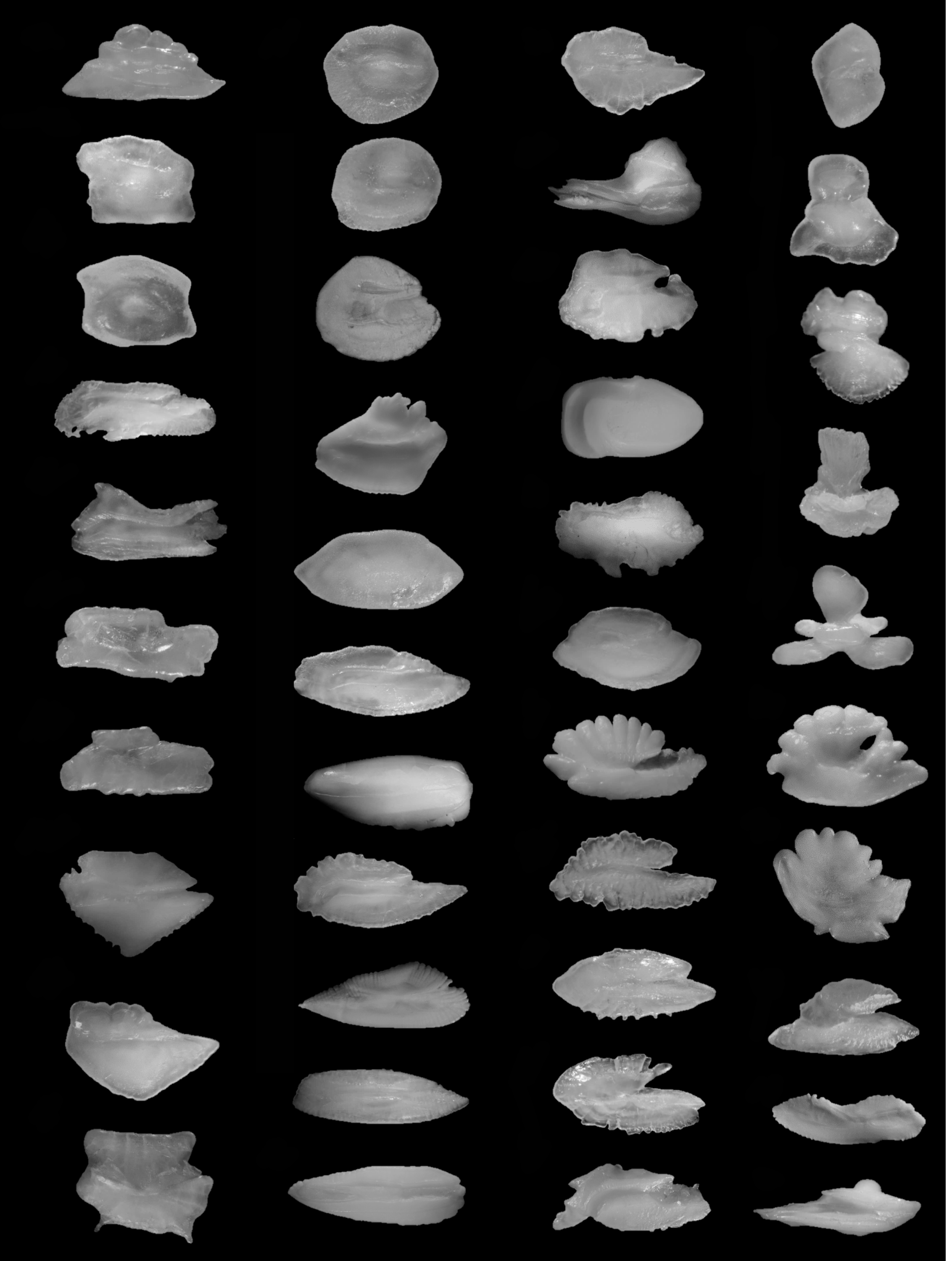
During image acquisition, modeling clay can be helpful for otoliths with pronounced convexity. Low-quality images may compromise the final analysis.
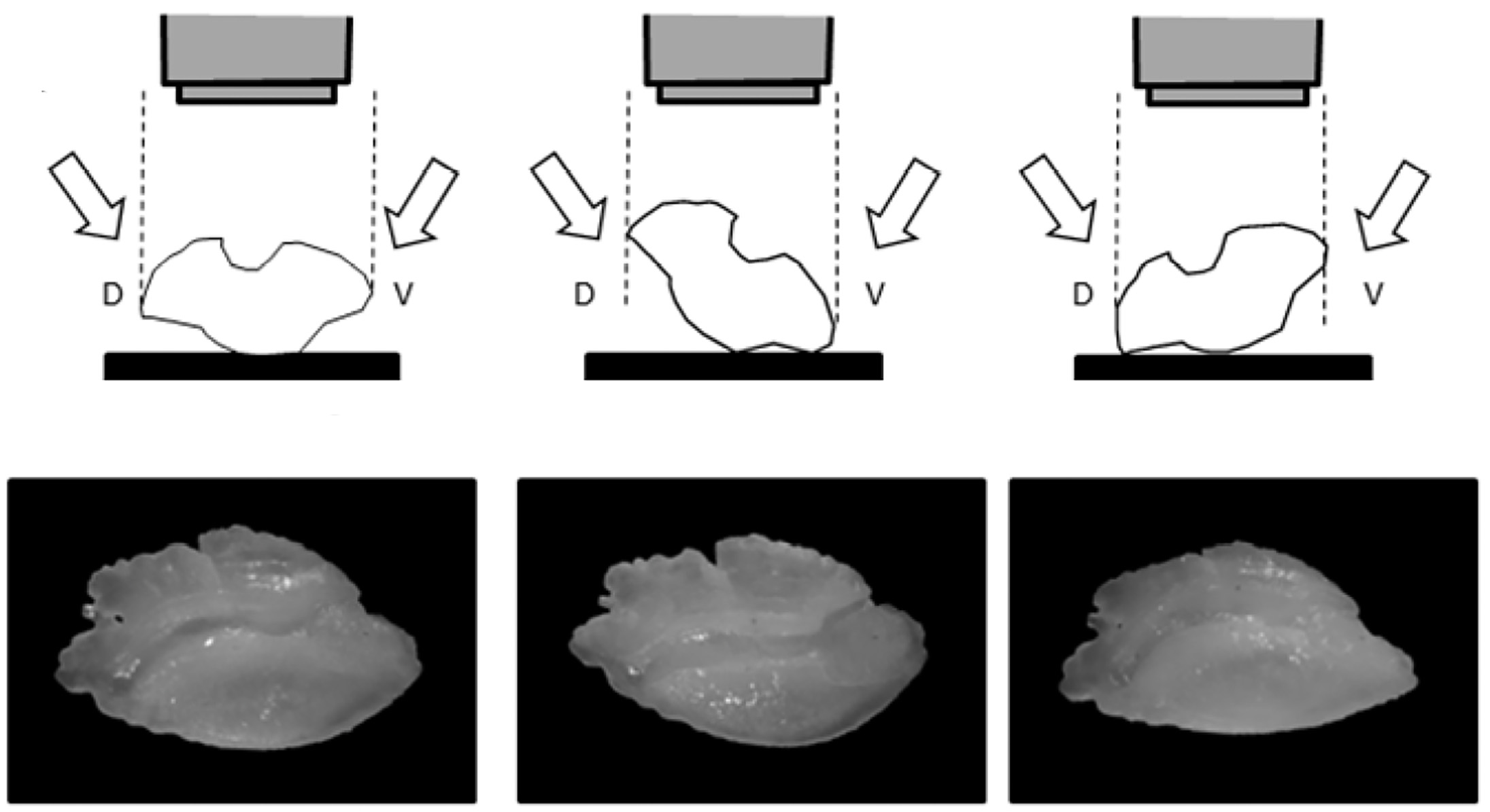
Although many ageing laboratories capture images from the lateral side, this is not recommended for morphological studies; however, it is acceptable for otoliths that are flat rather than convex.
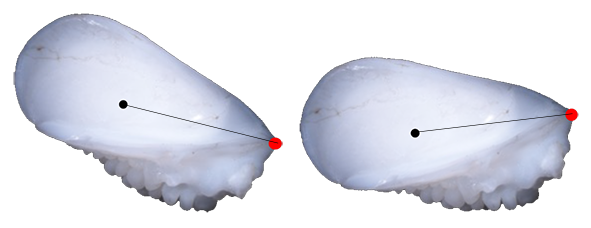
The package determine automatically the initial contour point, which represents the maximum distance from the otolith centroid to this point locating to the right. This point is usually the rostrum, which is a feature clearly recognized in many species by its peaked shape. Minor image misalignment is acceptable as long as the maximum distance is correctly determined. When this standardization criterion may produce mistakes, users can define an alternative morphological features. For example, in Pseudotolithus elongatus the rostrum is absent and the anterior margin can have different shapes, in this case can be used the margin postero-ventral of cauda ending. For that two approaches are possible: either previously adjust the orientation in all images, or manually select the initial point via the package’s options.
Light
Automatic contour detection is highly sensitive to illumination conditions, including the type and intensity of lighting, background uniformity (black color) and contrast. To minimize variability and ensure reliable results, we recommend acquiring all images under consistent lighting and background conditions.
Scale
Although this package does not estimate morphometric measurements, it is recommended that images include a scale reference, preferably the same for all images. It does not influence in the contour extraction.